The Growing Risk of AI in Education
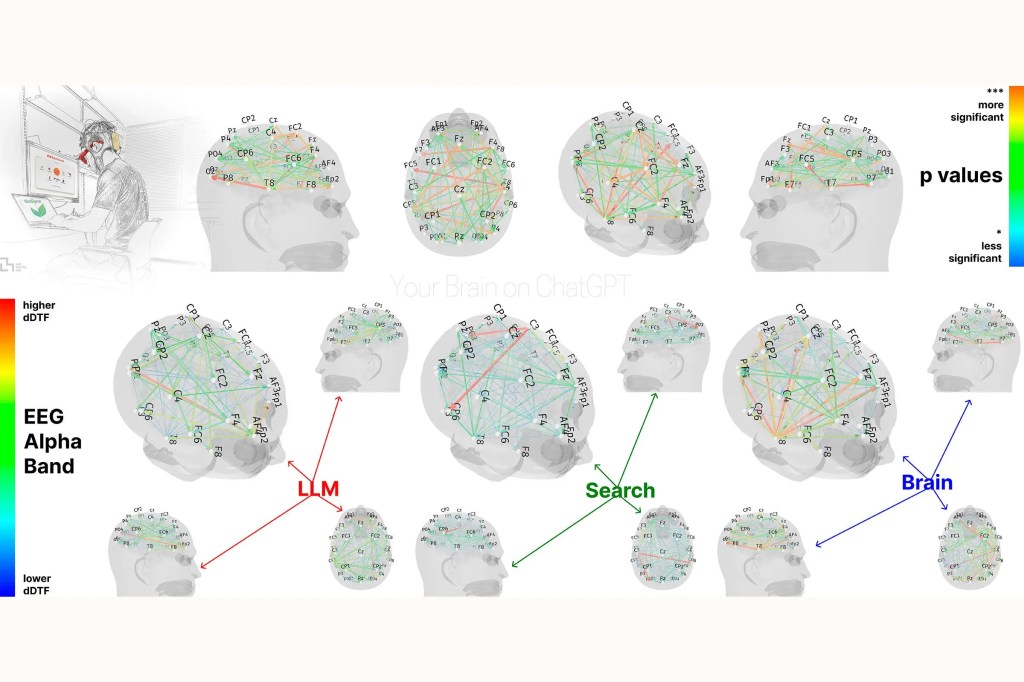
A recent study from MIT, covered in TIME, confirms what many parents are starting to worry about: when kids rely on AI tools like ChatGPT to do the thinking for them, their brains start to check out.
https://time.com/7295195/ai-chatgpt-google-learning-school/
The researchers tracked brain activity in 54 participants using EEG scans while they wrote essays under three different conditions: using ChatGPT, using Google Search, and writing without assistance.
Those who used ChatGPT showed significantly lower brain engagement compared to the other two groups. Writing and analysis require deep thinking, and now we’re skipping that step entirely. By the third essay, many stopped thinking altogether, simply copy-pasting what ChatGPT provided.
When the same participants were later asked to write without AI assistance, the ChatGPT group struggled to remember their earlier work. The study found their brain activity related to memory retrieval was significantly lower than the other groups.
Google Search users, however, performed similarly to those who had no help at all. Searching still forces you to read, compare, filter, and decide. ChatGPT skips that. It gives answers immediately, with no effort. That’s the danger: it feels like thinking, but it’s not.
Anyone who has studied philosophy knows that the ‘answer’ isn’t the most important thing, it’s the process to get there.
The Growing Risk of AI in Education
Kids learn by doing. By trying. By getting it wrong, fixing it, and building again.
When we hand over the thinking to AI, we rob kids of those moments. We strip out the struggle, which is where real growth happens. According to the MIT study, this isn’t just a small issue. It’s a measurable shift in brain function.
Teachers and parents have a right to be worried. We ignored the dangers of social media, only years later realizing the effects it has on brain development and mental well-being. Are we about to do it all over again?
Everywhere we look, companies are jumping on the AI education train, careless of the risk. Promising amazing results with AI tutoring and teaching, all while glossing over the decades of educational research on how learning actually happens.
We don’t want to raise a generation of students who can ask questions but can’t answer them on their own.
Why Quantum Makers Studio Is Different
At Quantum Makers Studio, we aren’t anti-AI. In fact, we believe AI can be a powerful tool when it’s used the right way.
The study itself cites that participants who first wrote the paper on their own, then used AI to improve their drafts, performed remarkably better than the other groups.
But we never hand our students answers. We don’t rely on pre-written code, pre-packaged kits, or cookie-cutter projects.
We teach kids to:
- Try.
- Break it.
- Fix it.
- Build again.
As educators, it can be painful to watch a student struggle or get upset when they can’t figure things out. But if we don’t teach kids to think for themselves, they may not know how to do it later.
Ready to See the Difference?
If you’re curious about how we build thinkers in an AI world, message us today.
 Quantum Makers Studio
Leave a comment